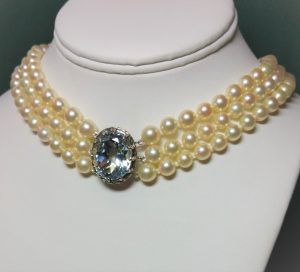
Garnet – Not just red!

The Word “Garnet” is derived from the Latin word for ‘Pomegranate’. This is due to the red colour of the seeds which matched the colour of the most common Garnet species (Almandine and Pyrope).
Did you know?
Garnet is commonly known as the Birthstone for January, however did you know that garnet comes in an amazing range of other colours?
Today, gemstones are facet cut (lots of small faces angled and polished) which make gemstones sparkle more. In times past, red Garnets and other red gems, which were polished smooth, these were known as “Carbuncles”. This word comes from the Latin for “live” or “burned coal”.
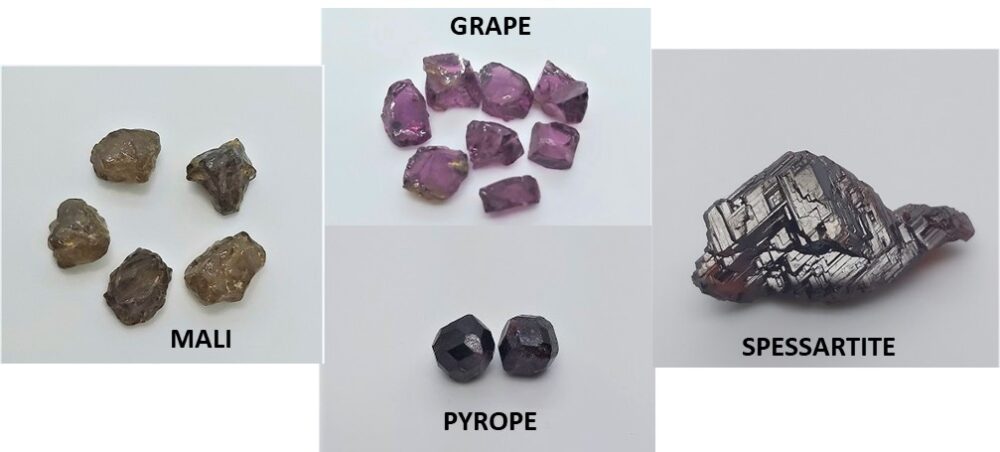
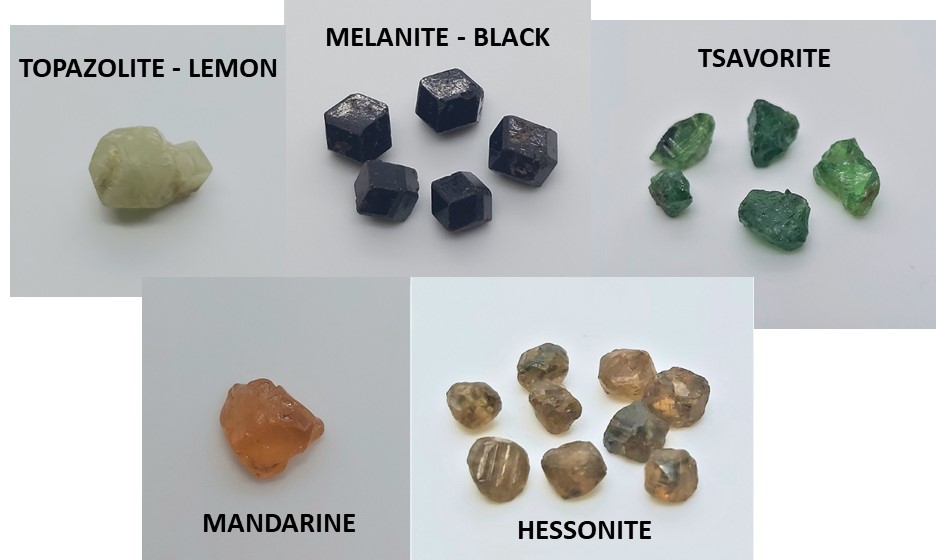
Garnet Crystals
Below, are some of my own Garnet crystals. I hope to add to this collection in time and to acquire as many different types and colours, as possible.
Garnets are found at various locations around the world. Brazil, a vast array of varieties, Namibia, Afghanistan, Pakistan and Myanmar are known for Spessartine, Kenya & Tanzania for Tsavorites. Iran & Russia, Demantoid. Sri Lanka the major suppler of Rhodolite and India Red Garnets.
Here’s the Science bit…
All garnet species possess similar properties and have the same crystal structure (cubic like diamond), but have a different chemical compositions. Garnet is an Isomorphic series (Iso = equal, morphic = shape). Below shows the main broad species.
Note: in one series X can = Mg (Magnesium), Fe (Iron) or Mn (Manganese)and Y will always be Aluminium. While in the other series Y can be = Cr (Chromium), Al (Aluminium) or Fe (Iron) but X will always be Ca (Calcium). Garnet is most certainly a complex gem, but a fascinating one.
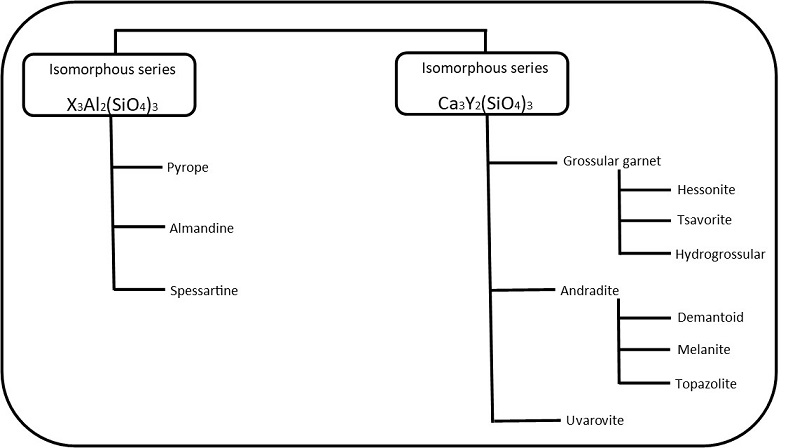
The two main series above are known as Pyralspite, (Pyrope Almandine and Spessartine) and the other is known as Ugranite, (Grossular, Andratite and Uvaroite)
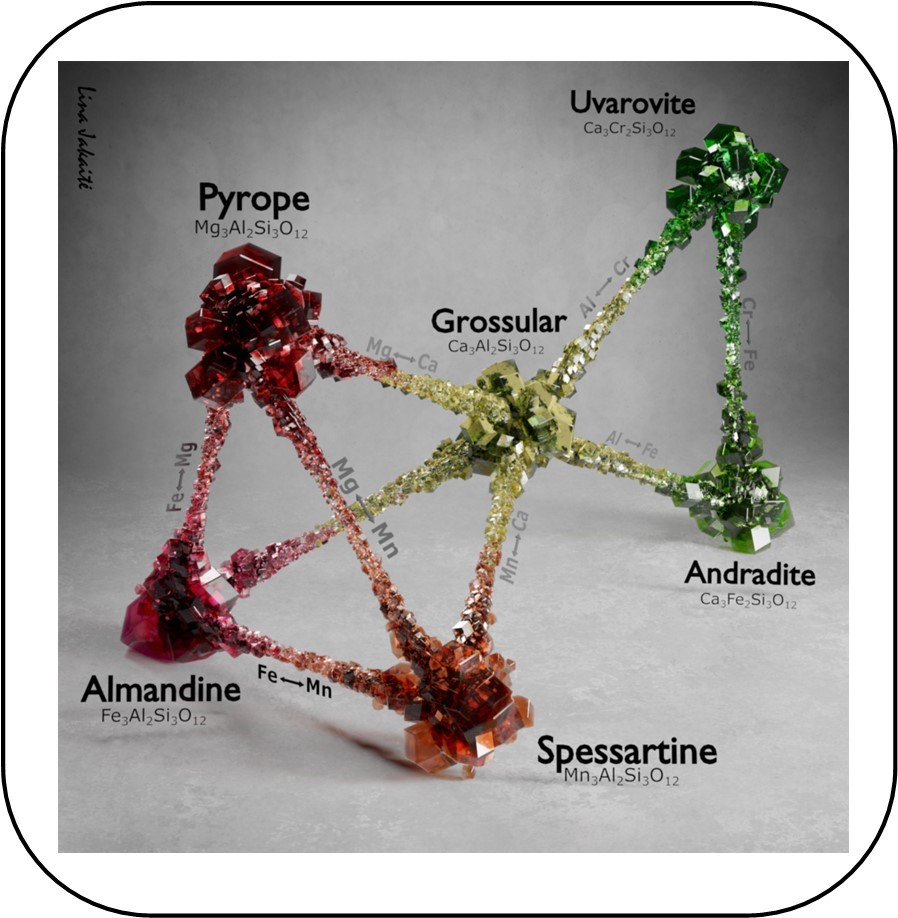
However there are many other “mixes” of garnets which are a crossover of the two series. You would never find a completely pure form of any one of these species.
Blue garnet doesn’t exist….or does it?
When I first started gemmology I was always told that the only colour not found in Garnets was Blue. However this is not actually true, though this species is exceptionally rare, it does exist.
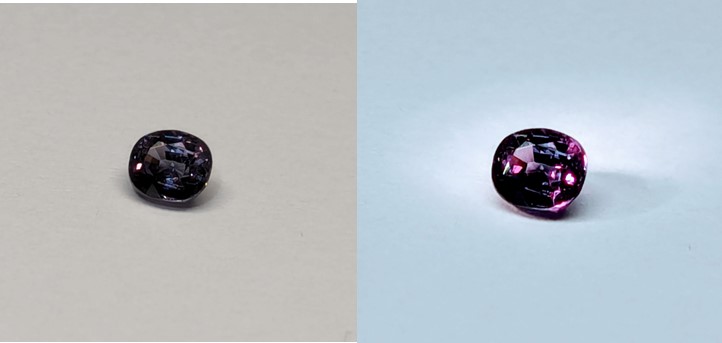
It was discovered in around the mid 1990’s in Bekily area of Madagascar and falls within the Pyrope-spessartine range, but also has similar colour change effects as in alexandrite, shifting from blue-green to purplish red depending on the type of light used. This is due to the presence of Vanadium or Chromium in the crystal lattice just like Alexandrite. One “large” specimen sold for $1.5 million per Carat! (one Carat is equal to 1/5th of a gram) This is such rare variety but i have now managed to find a few small pieces! One shown below, it’s an amazing gemstone.
Here is a very good image, to give the idea of how varied garnet can be. Image used with permission. (W. Mangapro (IGS/Ganoskin)
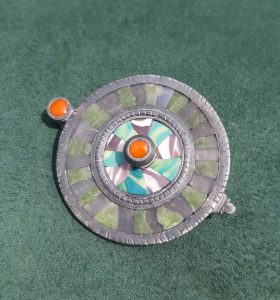
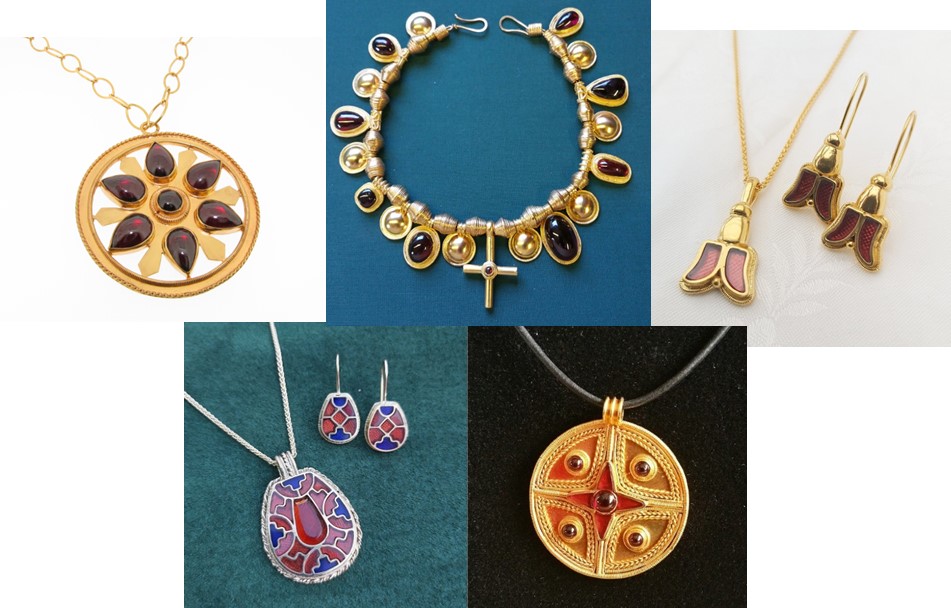
Garnet has been a prized gem in many civilisations for millennia. My particular favourite is from around the Migration period (c. 375AD to 570AD) and Anglo – Saxons.
Here are some pieces I have replicated from the Romans and Anglo-Saxons using the most common reds of garnets. The Red varieties are generally speaking the least costly and are the most abundant, so no wonder they continue to be so popular.
Published by Nicky Wade-Evans FGA (Fellow of the Gemmological Association of Great Britain)