The Word “Amethyst” Is from the Greek word “Amethystos” which means Non-intoxicating. This is probably why the Greeks and Roman’s believed that Amethyst guarded against drunkenness. Many drinking vessels were made of Amethyst.
Did you know?
Amethyst is commonly known as the Birthstone for February and is from the very large family of Quartz which include Rock quartz, Citrine, Rose quartz, Smokey quartz and Prasolite.
Amethyst
Here are a selection of my own Amethyst rough along with facet cut and cabochon gemstones. These are only small pieces, The biggest Amethyst Geode is called The Empress of Uruguay and stands at 3.27 meters tall and weighs 2.5 tonnes!

Here’s the Science bit…
Quartz is the most abundant mineral on earth and is made of the two most abundant chemicals on earth, Oxygen and Silicon. The chemical formula for Quartz is SiO2. Amethyst’s main sources include Brazil, India, Madagascar and Sri-Lanka.
Quartz is split into two types, Crystalline (large single crystals like Amethyst) and Polycrystalline – aggregates of microscopic crystals (such as Jasper and Carnelian.)
Amethyst gets it’s purple colour from Iron (Fe). The colour can vary in saturation from a very light “Rose de France” lilac /lavender to a very deep luscious velvety purple.
When heated it turns Yellow / Orange (Citrine) and when irradiated can become Green (Prasiolite).
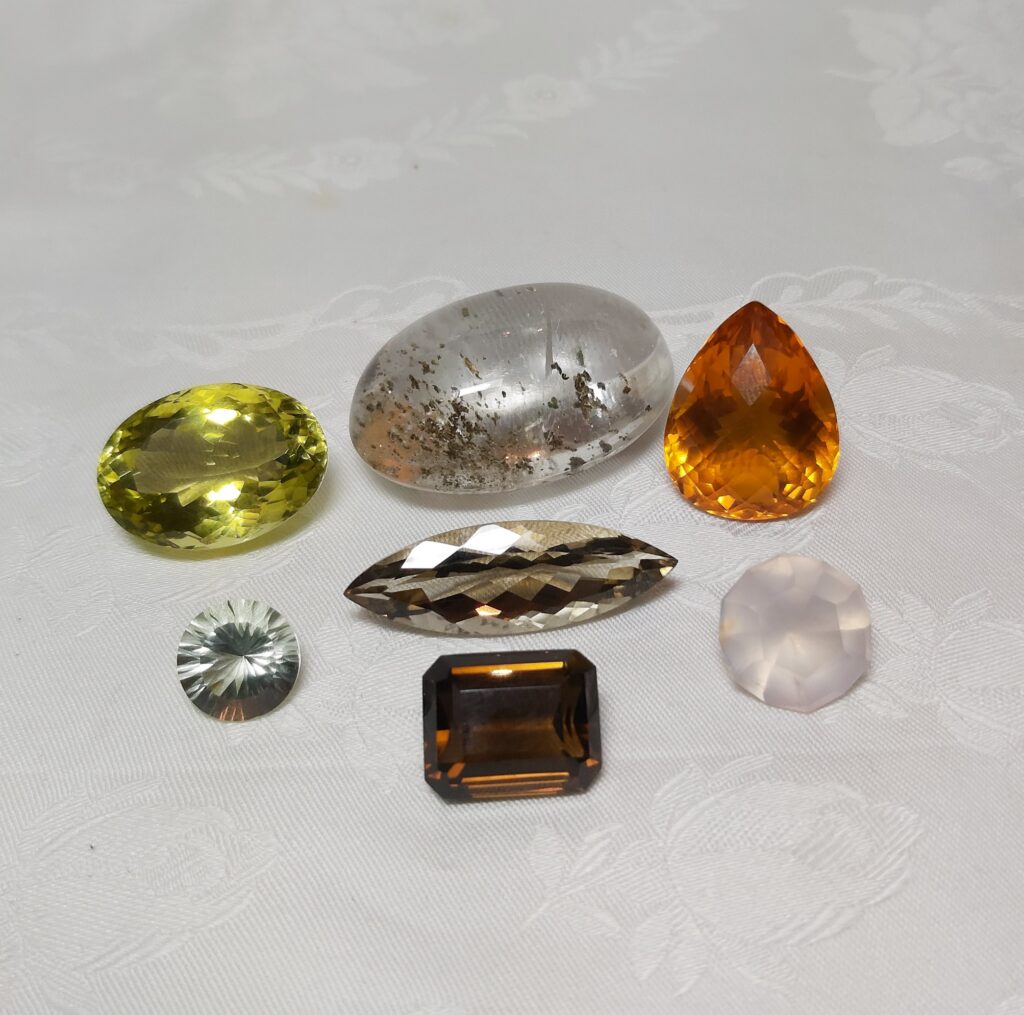
(Above top line, Yellow Quartz, Rock Quartz with Chlorine inclusions, deep heated treated Citrine. Middle, Prasiolite, Smokey Quartz and Rose Quartz lastly darker Smokey Quartz.)
In the medieval times Soldiers would wear amulets of Amethyst for its healing properties against injury and providing a cool head in battle.
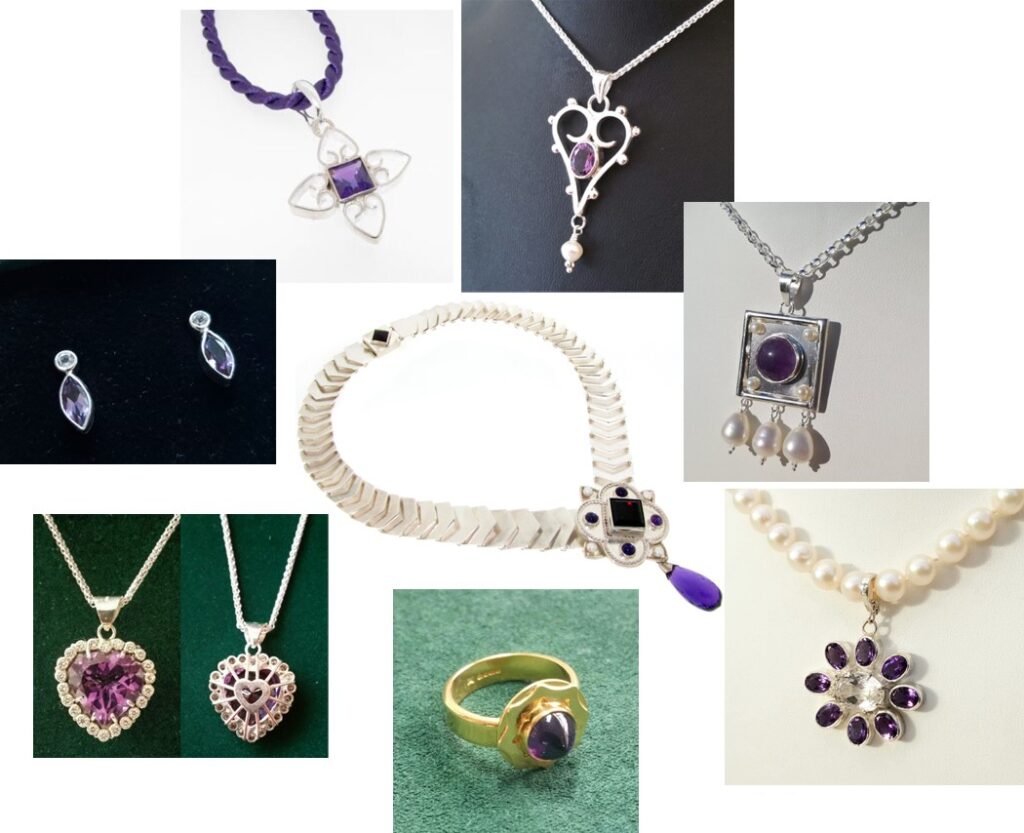
Here are some pieces I have made using Amethyst. The designs range from Medieval onwards.